
Building a Custom Home in Alburtis, Berks County, PA – Final Phase: Stormwater Management & Finish Grading


After months of excavation, foundation drainage, utility trenching, site preparation, and waiting while the house was completed, we're finally at the last phase of this custom home build in Alburtis, Berks County, PA!
The house is built, the utilities are in, and it's time to tackle the final pieces of the sitework: stormwater management and finish grading.
These may be some of the last things completed on a new construction project, but they're far from an afterthought. Managing rainwater properly protects the home, helps prevent erosion, and reduces the risk of runoff affecting neighboring properties. And once the drainage system is in place, finish grading and lawn installation turn a construction site into a place the homeowners can finally enjoy.
Let's finish this build the right way.
Stormwater Management: Where Does All That Rain Go?

When you build a new home, you're changing the way water moves across the property.
The house roof collects rainwater. Disturbed soil can be more vulnerable to erosion. Changes in elevation and new structures can alter existing drainage patterns.
That's why stormwater management is an important part of modern residential construction. The goal is to manage runoff according to the property's engineered stormwater plan, helping reduce erosion, control the flow of water, and limit impacts on surrounding properties.
For this home, the engineered system included three rain gardens connected by underground pipes.
And no, these aren't flower gardens designed to look pretty in the rain. They're part of the property's stormwater management system.
How the Three Rain Gardens Work
The system was designed to slow down and manage runoff in stages rather than sending all that water rushing toward one low spot.
Rain Garden #1: Slow the Water Down
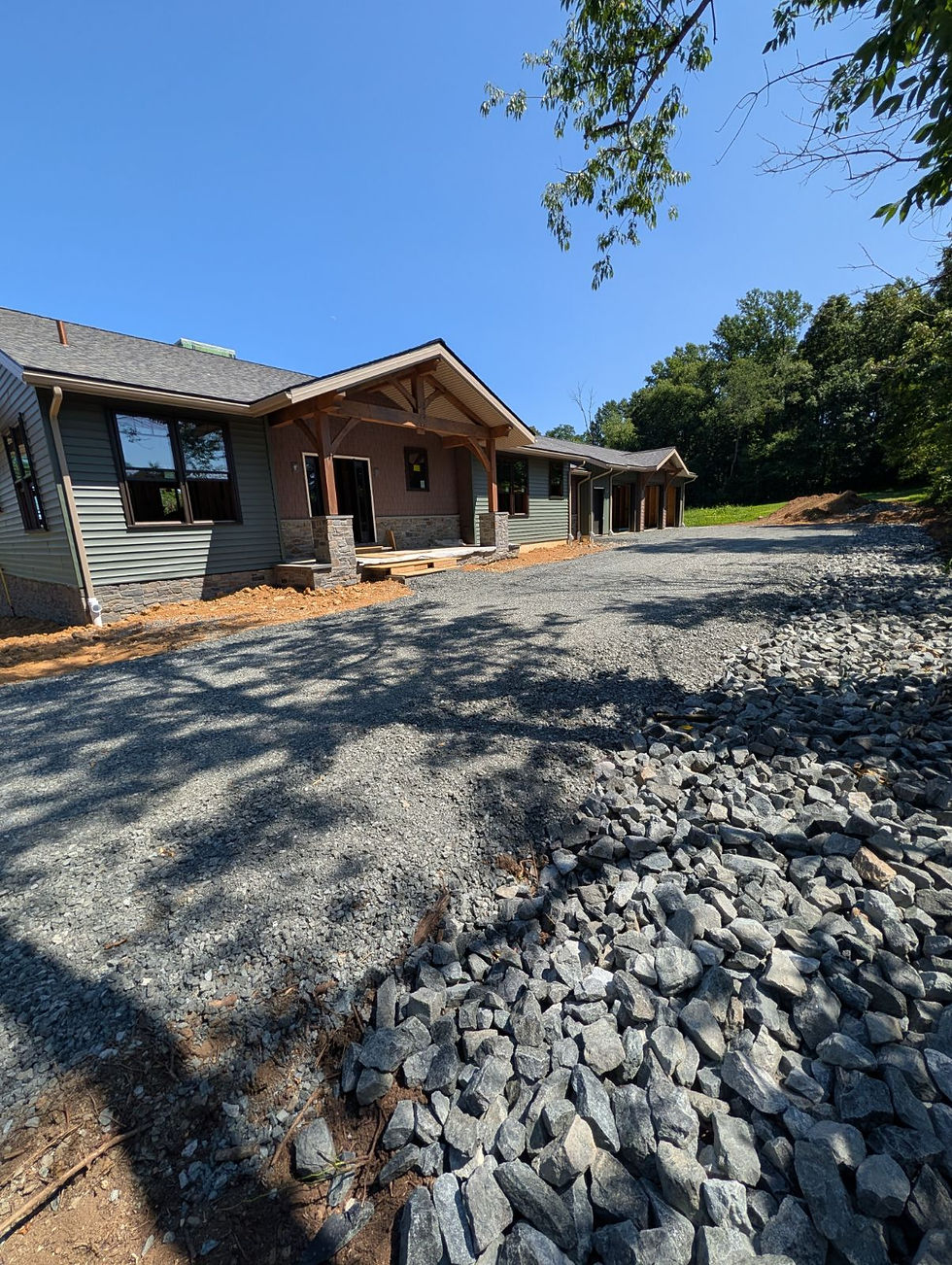
The first rain garden next to the driveway uses large rock to collect rainwater, slowing its the flow of water to improve absorption into the ground.
The home’s roof gutters are also piped directly into the stormwater system, helping manage runoff collected from the roof rather than simply discharging it beside the foundation.
Rain Garden #2: Continue Managing the Flow


The second rain garden provides another stage for managing the water coming from both rainfall and the downspouts.
As runoff moves through the system, this lower area helps slow and direct the flow before water continues toward the final rain garden- which is connected via PVC pipes.
Each stage is part of a larger system designed to manage stormwater across the property.
Rain Garden #3: Absorb the Water and Manage Overflow
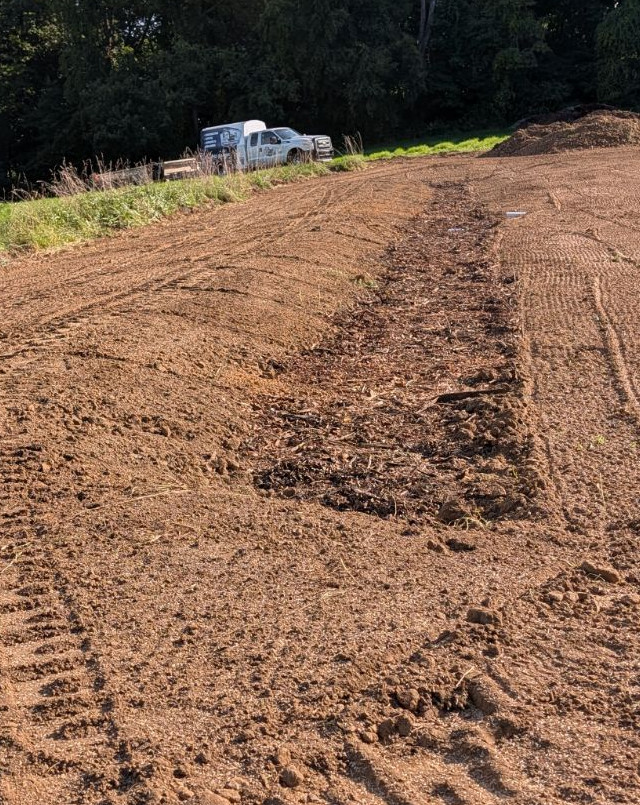
The final rain garden is different from the first two. Instead of being made primarily of large rock, it uses amended soil and mulch to help water soak into the ground, and swaling to hold water in the bed.
An overflow pipe provides a path for excess water to travel over the hill, toward an area with several acres available to absorb it before it reaches the road and other properties.
The big picture? Each component has a job, and together they manage water through a planned route across the property.
No stormwater system can guarantee that flooding will never occur under every possible weather condition. But a properly designed and installed system helps control runoff and reduce the risk of water-related problems for the home and surrounding properties.
Why Stormwater Management Matters for Your New Home

It's easy to focus on the visible parts of a new build: the house, driveway, landscaping, and lawn.
But where the water goes matters just as much. Without appropriate stormwater management, runoff can contribute to:
Soil erosion and washed-out areas
Water collecting in unwanted low spots
Drainage problems around the house
Excessive runoff toward neighboring properties
Damage to newly seeded lawns and landscaping
The right solution depends on the property's grades, soil conditions, engineered plans, and local requirements.
For this project, the three rain gardens, connecting pipes, roof drainage, and overflow route were all parts of the overall plan.
Stormwater components need to be installed at the right point in the construction sequence so they aren't damaged by later work. This is also why we waited until the other exterior & interior work was far enough along before completing the system.
Good sitework isn't just about getting each task done. It's about doing things in the right order.
Finish Grading: Turning a Construction Site Into a Yard

With the stormwater system in place, we could finally move on to the last major step: finish grading.
By this point, we had a very large pile of topsoil waiting to be spread across the property.
We used an excavator, skid loader, and bulldozer to distribute the topsoil, aiming for approximately 6–8 inches of topsoil across the property.
Finish grading isn't simply making everything look flat. The ground still needs to direct water appropriately, work with the property's drainage features, and transition naturally around the house and yard.
Once the grades were established and the topsoil was spread, we moved on to preparing the surface for grass.
Rockhounding: Getting the Lawn Ready

If you've ever walked across a yard barefoot and immediately regretted it, you understand why this next step matters.
Construction can leave rocks scattered throughout the soil, even after topsoil has been spread.
We ran a rockhound over the graded areas to remove rocks and debris from the surface, leaving a smoother finish for the new lawn.
It's a step that makes a real difference in how the finished yard looks and feels.
The goal was to give the homeowners a clean, smooth, barefoot-friendly lawn—not a yard where every step feels like a game of hopscotch.
Choosing the Right Seed for a New Lawn
With the grading complete and the surface prepared, it was time to seed.
We used a premium seed blend that combines two types of grasses with different jobs.
Fast-growing grass establishes quickly, helping provide early ground cover and erosion control while the slower-growing grasses get established.
Perennial grasses take longer to develop, but they make up the larger portion of the blend and are intended to provide lasting lawn coverage, returning year after year under suitable growing conditions and with proper care.
This combination helps address two needs at once: protecting the newly disturbed soil in the short term and establishing a lawn that can continue to thrive over time.
After spreading the seed, we used a straw blower to apply straw across the seeded areas.
The straw helps protect the seed and soil from rain impact, wind, and washout while the grass begins to grow.
Now the homeowners can watch the yard transform from fresh topsoil into a new lawn.
The Final Phase Is Complete!

With the stormwater system installed, topsoil spread, grades finished, rocks removed, and the lawn seeded and strawed, our sitework contract for this custom home was complete.
And the best part?
The homeowner finally got to move in!
This project involved much more than digging a basement. Over the course of the build, each phase built on the one before it. From preparing the foundation area to managing stormwater and establishing the lawn, the goal was to leave the homeowners with a property that was ready for the next chapter.
We love seeing a project come together, especially when we've been involved from the early excavation stages through the final grading.
Because a beautiful home deserves sitework that's been done with the same level of care.
That's how we do things at K+L Construction: getting it right from the ground down, so you can build with confidence.
Frequently Asked Questions
What is a rain garden, and how does it help manage stormwater?
A rain garden is a landscaped or engineered area designed to temporarily collect stormwater and help it soak into the ground. Some systems also use stone and pipes to slow and direct runoff. The design depends on the property's drainage needs, soil conditions, and stormwater plan.

Why is stormwater management required for new home construction?
New construction changes how water moves across a property. In addition to keeping the stormwater off your foundation and out of your basement, local stormwater requirements help address runoff, erosion, and potential impacts on neighboring properties and public infrastructure. The specific requirements depend on the project and applicable local regulations.

Why is finish grading important after construction?
Finish grading establishes the property's final contours, helps direct water according to the drainage plan, and prepares disturbed areas for topsoil, seed, and landscaping. Proper grading is an important part of protecting the home and creating a usable yard.
Related Articles: Follow This Custom Home Build
This final phase completes our series documenting the sitework for a custom home in Alburtis, Berks County, PA.
Phase 1: Basement Excavation – How we laid out and excavated the foundation area for the new home.
Phase 2: Foundation Drainage, Backfill & Stone Base – Preparing the foundation area and stone base for the next stages of construction.
Phase 3: Utility Trenching & Underground Services – Installing the underground connections needed to serve the home.
Complete Custom Home Sitework Package – Coming soon: a look back at the entire project, from the first excavation to final grading.
Residential Sitework in Alburtis, Berks County, PA, and Beyond

Planning a custom home build? From basement excavation and foundation drainage to utility trenching, stormwater management, septic work, and final grading, we can help coordinate the sitework that needs to happen before you can fully enjoy your new home.
We especially enjoy working with homeowners who are managing their own custom builds and want a contractor who takes the details seriously.
K+L Construction provides excavation sitework, construction services, basement excavation, foundation drainage, water management, concrete, utility installation, grading, and site preparation throughout Bucks County, Berks County, Montgomery County, Lehigh County, and neighboring communities throughout Southeastern Pennsylvania, including Boyertown, Bally, Fleetwood, Kutztown, Oley, Topton, Bechtelsville, Reading, Pottstown, Quakertown, and more.


Comments