
3 Little Things (and 1 Big Thing) We Did on This Concrete Project That Made a Huge Difference in Berks County, PA

Updated: Aug 1
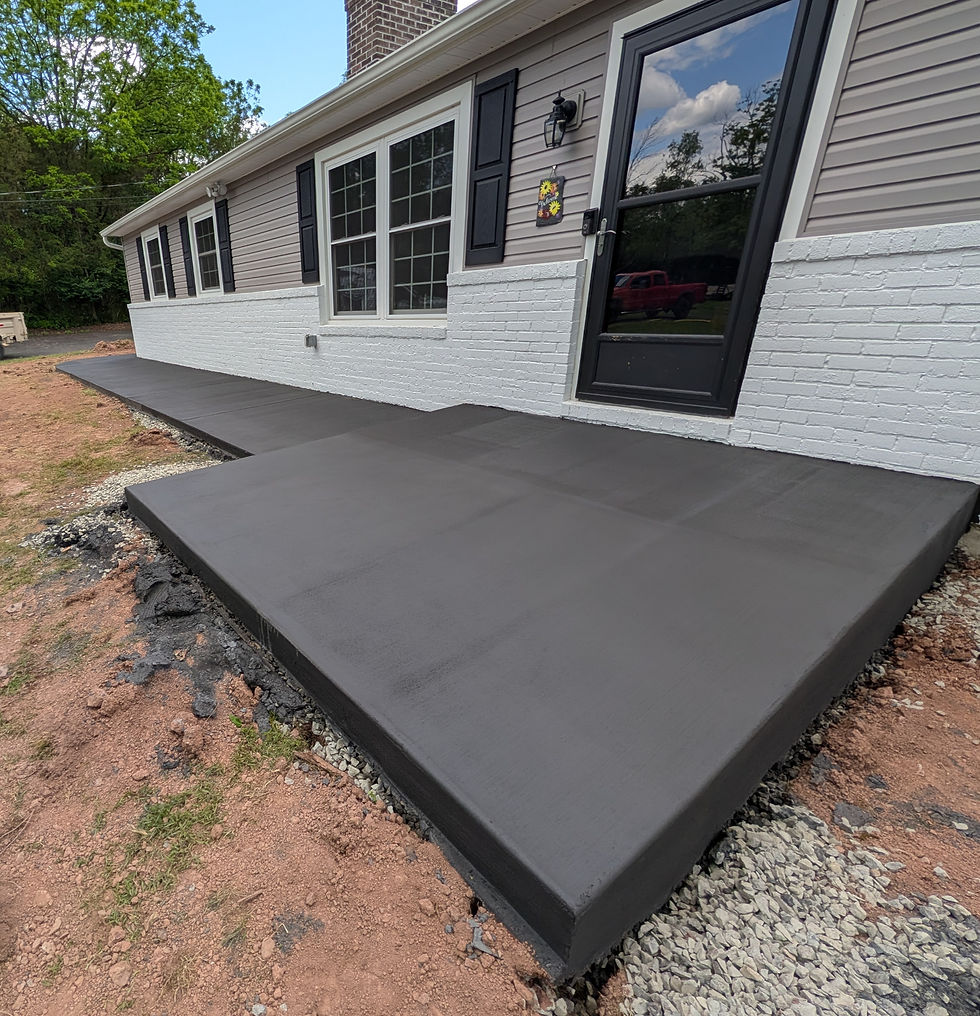
When most people look at a finished concrete patio or walkway, they notice the smooth finish, clean edges, and fresh appearance. What they don't see are the dozens of small decisions that separate an average project from one that's built to last.
On this project, we focused on getting every detail right—not just the concrete itself, but everything around it that affects how it performs for years to come.
Here are three small details and one major improvement that made a huge difference.
Little Thing #1: We Customized the Forms to Create the Perfect Curve

Curved walkways aren't something you simply "eyeball."
To achieve a clean, flowing appearance, we carefully adjusted and customized our forms until the curve looked natural from every angle. Even slight imperfections become noticeable once concrete hardens, so taking the extra time during setup is one of the best investments you can make.
The finished walkway now follows the landscape naturally instead of looking forced or uneven.
It may seem like a small detail, but it's one of the first things people notice when they walk up to the home.
Little Thing #2: We Buried the Downspouts Instead of Leaving Water Next to the House

Rainwater is one of the biggest enemies of concrete and foundations.
Rather than allowing the downspouts to dump water next to the new patio, we installed underground Schedule 40 PVC piping beneath and alongside the slab. The water now travels safely away from the house and discharges toward the edge of the property.
This helps:
Reduce water pooling around the patio
Protect the new concrete from erosion
Keep water away from the home's foundation
Reduce future maintenance
It's one of those improvements that homeowners rarely think about—but it can prevent thousands of dollars in future repairs.
Little Thing #3: We Relocated the Ground Rod

Sometimes the smallest details make the biggest visual difference.
The home's electrical ground rod was located exactly where the new concrete would be installed. Rather than leaving it sticking awkwardly out of the finished walkway, we carefully relocated it before the pour.
The result is a cleaner, safer, and more finished-looking project without unnecessary obstacles in the middle of the concrete.
It's a detail many contractors might simply work around—but we believe the finished product should look intentional from every angle.
The Big Thing: We Waterproofed the Foundation While Everything Was Already Open

The homeowners had concerns about occasional moisture in their finished basement.
Since we were already excavating for the new patio and walkway, it made sense to address the issue before everything was covered back up.
We excavated alongside the foundation, thoroughly pressure washed the wall, applied a fresh waterproof foundation coating, and backfilled using 2B clean stone and soil to improve drainage.
Combined with the newly buried downspouts, this creates a complete water-management system that helps keep water moving away from the home instead of toward it.
Sometimes solving a problem isn't about one product—it's about several improvements working together.
Now the homeowners have a beautiful new outdoor living space and greater confidence that water won't find its way into their basement.
The Difference Is in the Details

Anyone can pour concrete.
What separates a quality installation is paying attention to the details that most people will never notice—but that make a lasting difference in appearance, performance, and durability.
Whether it's shaping the perfect curve, protecting the foundation from water, or taking the time to relocate something as simple as a ground rod, these are the kinds of decisions that add up to a project built the right way.
At K+L Construction, we believe every project deserves that level of care.
Related Blog Posts

Learn how pump trailers, smaller trucks, and ground protection mats helped avoid costly driveway damage.
A closer look at how underground drainage helps protect foundations, patios, and landscaping.
See how foundation waterproofing and proper drainage work together to keep moisture out.
Frequently Asked Questions
Why is shaping concrete forms so important?
The forms determine the finished shape of the concrete. Taking extra time to fine-tune curves and transitions creates a more natural-looking project and helps ensure consistent widths and clean edges.
Is burying downspouts really worth it?
Absolutely. Directing roof runoff away from your home helps protect foundations, reduces erosion, minimizes standing water, and extends the life of patios, walkways, and landscaping.
Can foundation waterproofing be done during a patio installation?
Yes—and it's often the most cost-effective time to do it. Since excavation is already taking place, homeowners can address foundation moisture concerns without paying for separate excavation later.
Proudly Serving Berks County and Surrounding Areas

K+L Construction proudly serves homeowners throughout Berks County and the surrounding communities throughout southeastern Pennsylvania with professional concrete installation, excavation, drainage solutions, foundation waterproofing, grading, and site preparation.
If you're planning a new patio, walkway, driveway, or other outdoor improvement, or need help with water management, we'll help you build it right from the ground up.
Request Your Free Estimate

Whether you're installing new concrete, solving drainage issues, or improving your home's foundation protection, we're here to help you complete the job with quality craftsmanship and attention to every detail.


Comments