
Barn Drainage, Dry Lot Installation & Septic Repair Project: Transforming a Muddy Horse Property in Berks County PA

Updated: Aug 24

Project Snapshot
Project Type: Barn Drainage, French Drain Installation, Dry Lot Construction & Septic Repair
Location: Berks County, PA
Problem: Standing water, mud around the barn, poor grading, and a septic system issue causing the pump to run continuously.
Solution: Regrading, French drain installation, downspout drainage improvements, dry lot construction, septic cleanout repairs, and final site restoration.
The Horse Owner’s Challenge

When this homeowner purchased their property, they inherited a problem that had likely been developing for years.
The barn had been built at the bottom of two steep hills where stormwater from neighboring properties naturally flowed during heavy rain events. Instead of directing water away from the structure, much of the existing grading around the barn actually sloped toward it.
The result?
After every significant rainstorm, water would collect around the barn, creating muddy conditions, standing water, and an unusable area for horses.
For horse owners, mud is more than just an inconvenience. Prolonged exposure to wet conditions can contribute to hoof problems, fungal infections such as thrush and scratches, and dangerous slipping hazards. Whether horses are actively being ridden or recovering from an injury, having a clean, dry surface is essential.
The homeowner's goal was simple: create a safe, functional environment that would allow their horses to come home.
What We Found

Upon evaluating the property, we identified several contributing factors:
Improper grading directing water toward the barn
Runoff from neighboring properties funneling through the site
No effective drainage system to collect and redirect water
Downspouts discharging roof water directly onto already saturated ground
Significant mud accumulation around the barn
A septic system pump running almost continuously due to groundwater infiltration
Rather than addressing only one issue, we developed a comprehensive solution that would improve the entire property's water management system.
Step 1: Regrading the Property

Every successful drainage project starts with grading.
Think of grading as creating a blank canvas. Before any pipe or drainage system can function properly, surface water must be encouraged to move in the right direction.
We carefully reshaped the areas surrounding the barn, creating positive drainage away from the structure. We also adjusted the steep hillside between the barn and the house, reducing the severity of the slope and directing runoff toward planned drainage collection areas.
A subtle swale was incorporated into the grading design to naturally guide surface water toward the drainage system.
By correcting the grading first, we ensured that both surface water and subsurface water would work together instead of fighting against one another.
Step 2: Installing Over 375 Feet of French Drainage

With the grading established, it was time to install the drainage system.
The project included:
Approximately 175 feet of French drain along the house side of the barn
Approximately 200 feet of French drain along the far side of the barn
Connection of the roof downspouts into the drainage network
Each trench was excavated approximately 2 feet wide and 2 feet deep while maintaining consistent slope toward the discharge location in the woods.
To ensure long-term performance, every trench was lined with non-woven geotextile fabric. This fabric helps prevent soil infiltration while allowing water to move freely into the system.
The drainage pipe was bedded in 2B clean stone and surrounded with additional stone to maximize water movement and protect the pipe from future loading pressures.
For the drainage network itself, we installed:
4-inch Schedule 35 perforated PVC pipe for groundwater collection
4-inch Schedule 40 solid PVC pipe to connect roof downspouts
Downspout adapters to capture roof runoff directly at the source
Now, instead of collecting around the barn, stormwater has a dedicated path away from the property.
Step 3: Building a Horse-Friendly Dry Lot
With the drainage issues addressed, we turned our attention to creating a usable space for the horses.
The homeowner requested two 15' x 25' dry lot areas that would remain functional during wet weather conditions.
Excavation & Base Preparation
First, we removed the existing topsoil and established a flat surface.
Next, we installed woven geotextile fabric directly on the prepared subgrade. This heavy-duty stabilization fabric is commonly used beneath driveways because of its strength and durability.
Its purpose is simple:
Keep the stone where it belongs and prevent it from sinking into the soil below.
Drainage Layer
We then installed 4 inches of 2B clean stone.
Because 2B stone does not compact tightly, it creates void spaces that allow water to move freely through the system and drain away.
Separation Layer
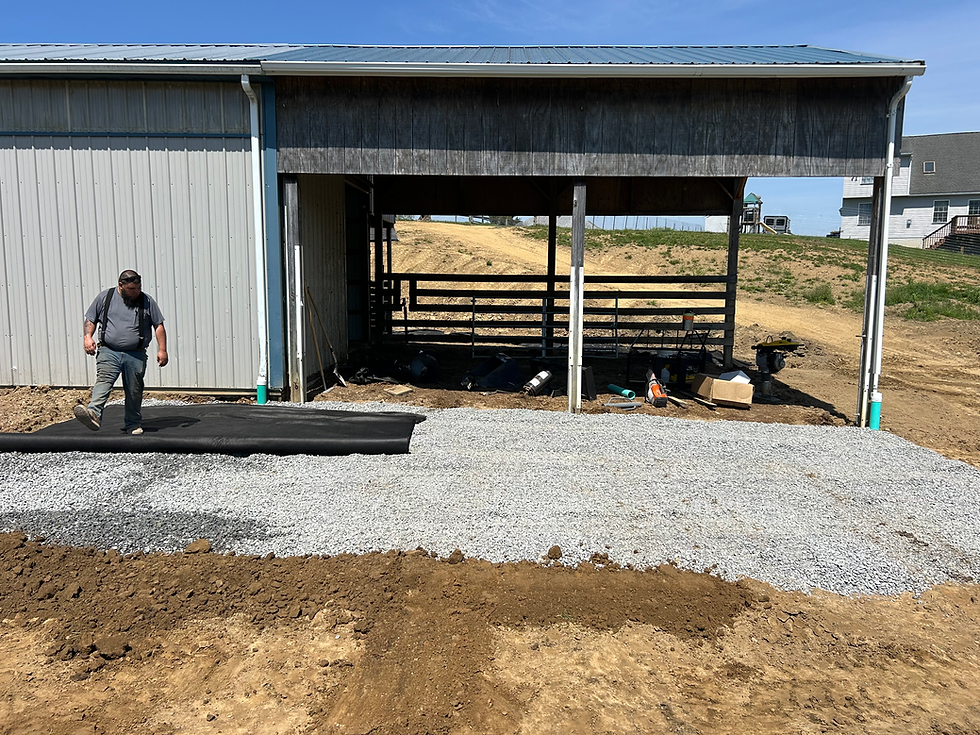
A second layer of non-woven geotextile fabric was installed above the stone layer.
This fabric keeps the stone and screenings separated while still allowing water to pass through.
Final Surface
Finally, we installed 4 inches of screenings (stone dust).
We intentionally use a thicker layer of screenings because we know horse traffic will naturally compact the surface over time. The additional depth helps ensure the fabric remains protected while providing a comfortable and durable footing surface.

The finished dry lot offers:
Improved drainage
Reduced mud
Safer footing
Easier manure management
Long-term durability
For many horse owners, properly designed dry lots can also serve as multi-purpose spaces for turnout, rehabilitation, or even riding.
Step 4: Solving an Unexpected Septic Problem

While working on the property, we noticed something unusual.
The septic pump appeared to be running almost constantly, and water could be heard trickling into the tank even when there had been no recent usage.
After investigating further, Kyle discovered improperly installed cleanout piping.
Over time, seasonal freezing and thawing had caused the cleanout assembly to separate, allowing groundwater to enter the septic system continuously.
This unwanted groundwater infiltration was forcing the pump to run far more often than necessary.
To correct the issue, we:
Excavated the affected cleanouts
Removed the incorrect piping
Installed the proper materials
Properly glued and sealed all connections
Once completed, the septic system returned to normal operation.
The Final Result

By the end of the project, this property underwent a complete transformation.
What was once a muddy, waterlogged area surrounding the barn is now a properly graded, drained, and functional space designed for both horses and their owners.
The completed improvements included:
Property regrading
Surface water management
Over 375 feet of French drainage
Downspout drainage integration
Horse dry lot construction
Septic cleanout repairs
Lawn restoration and seeding
Most importantly, the homeowner can now move forward with bringing their horses home knowing the property is prepared to handle future rain events.
What Horse Owners Should Watch For

Many horse property drainage problems develop slowly over time.
Watch for:
Standing water around barns
Mud accumulating in high-traffic areas
Water running toward structures
Constantly wet paddocks
Downspouts discharging near foundations or barns
Hoof issues related to wet conditions
Areas that remain saturated days after rainfall
Addressing drainage issues early is often far less expensive than repairing damage later.
Frequently Asked Questions
How do I know if I need a French drain around my barn?
If water consistently pools around your barn, paddocks, or turnout areas after rain, a French drain may help collect and redirect groundwater before it creates muddy conditions or structural problems.
What is the best surface for a horse dry lot?
A properly constructed dry lot typically includes a stable base, drainage layer, separation fabric, and a comfortable footing surface such as screenings. The right design helps reduce mud while remaining safe and comfortable for horses.
Why would groundwater cause my septic pump to run constantly?
If groundwater enters a septic tank through damaged or improperly installed piping, the system must continually process water that shouldn't be there. This can increase pump run times, raise utility costs, and shorten equipment lifespan.
Related Blogs
Areas We Serve

K+L Construction provides excavation, drainage solutions, septic services, horse property improvements, concrete work, grading, and site preparation throughout Berks County and the surrounding region, including Boyertown, Bally, Fleetwood, Kutztown, Oley, Topton, Bechtelsville, Reading, Pottstown, Quakertown, and neighboring communities throughout Southeastern Pennsylvania.
Need Help Solving Drainage, Mud, or Site Work Issues?

Whether you're dealing with standing water around a barn, a muddy paddock, drainage problems near your home, or a septic system concern, we're happy to take a look.


Comments