
French Drain Installation Around a Barn: Solving a Major Water Management Problem in Bernville, PA

Updated: Aug 24
Project Snapshot

Project Type: French Drain Installation & Property Drainage Improvements
Location: Bernville, Berks County, PA
Problem: Standing water, muddy conditions, and uncontrolled runoff collecting around a horse barn.
Solution: Installation of approximately 375 feet of French drains, integration of roof downspouts, property grading improvements, and controlled discharge of stormwater away from the barn.
Why This Property Needed French Drains

When we first arrived on site, it was easy to see why the homeowner was struggling with water issues.
The barn had been built at the bottom of two steep hills, creating a natural collection point for runoff from surrounding properties. During rainstorms, water flowed downhill and accumulated around the structure, creating muddy conditions and standing water.
To make matters worse, portions of the existing grading directed water toward the barn instead of away from it.
For this homeowner, the problem wasn't simply an inconvenience. Their goal was to bring horses home to the property, and muddy conditions can create serious challenges for horse owners, including hoof health issues, slipping hazards, and difficult day-to-day maintenance.
The solution required more than simply digging a trench. The entire drainage system had to be designed to collect water efficiently and move it away from the problem areas.
What Is a French Drain?
A French drain is an underground drainage system designed to collect groundwater and redirect it to a safe discharge location.
Rather than allowing water to sit on the surface and create mud, the system captures water below ground and moves it through a stone-filled trench containing perforated pipe.
When properly installed, French drains can:
Reduce standing water
Improve drainage around buildings
Protect foundations and structures
Eliminate muddy conditions
Improve property usability
Reduce erosion problems
French drains are often one of the most effective solutions when grading alone cannot solve the problem.
Step 1: Correcting the Grading

Before installing any drainage pipe, we first addressed the property's grading.
Many drainage problems begin with improper slopes. Water naturally follows the path of least resistance, so if the ground directs water toward a structure, drainage systems have to work much harder.
We regraded the area surrounding the barn and adjusted the hillside between the house and barn to encourage water movement toward the planned drainage system.
Think of grading as creating the roadmap and the French drain as creating the highway.
Without proper grading, even a well-installed drainage system may struggle to perform at its best.
Step 2: Excavating the Drainage Trenches
Once the grading was established, we excavated approximately:
175 feet of French drain along the house side of the barn
200 feet of French drain along the far side of the barn
Each trench was approximately 2 feet wide and 2 feet deep.
Proper slope is critical during excavation. Every section of pipe must maintain consistent fall toward the discharge point to ensure water flows efficiently through the system.
For this project, the drainage network was designed to discharge toward a wooded area where water could safely disperse.
Step 3: Installing Geotextile Fabric

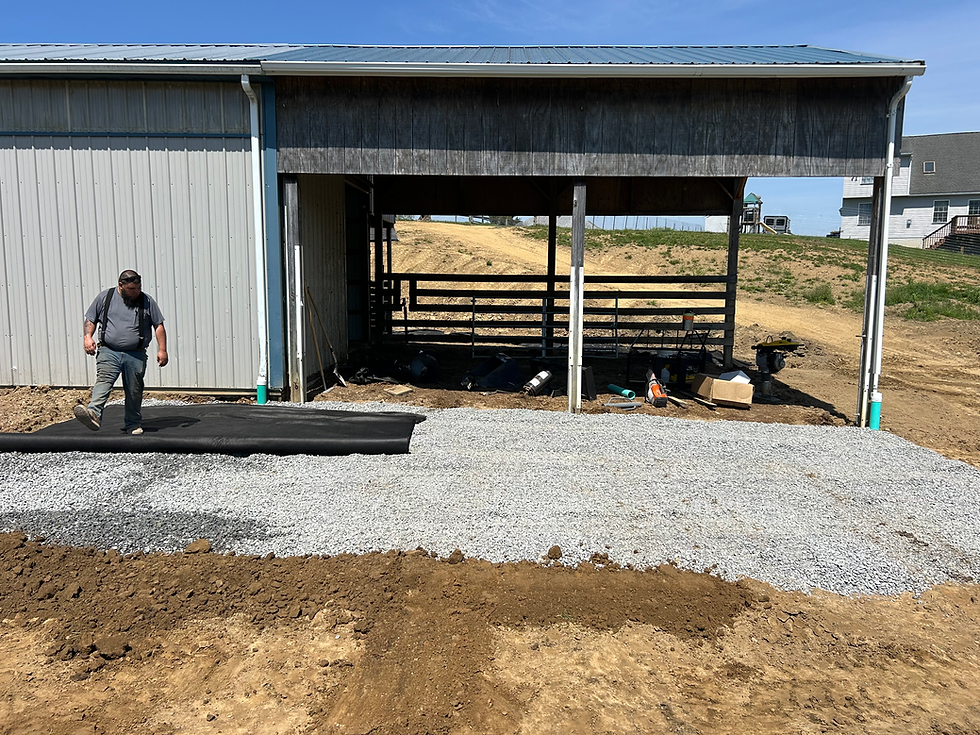
After excavation, we lined each trench with non-woven geotextile fabric.
This step is often overlooked by inexperienced installers but plays a major role in the long-term success of a French drain.
The fabric serves two important purposes:
Allows water to enter the system
Prevents surrounding soil from migrating into the stone and clogging the drain
Without proper fabric, drainage systems can lose effectiveness over time as soil fills the void spaces designed for water movement.
The fabric was installed along the bottom, sides, and top of each trench to completely encapsulate the drainage system.
Step 4: Installing the Drainage Stone and Pipe
With the fabric in place, we installed a bedding layer of 2B clean stone.
Because 2B clean stone does not compact tightly, it creates open spaces that allow water to move freely through the trench and into the drainage pipe.
We then installed 4-inch Schedule 35 perforated PVC pipe.
Schedule 35 pipe offers excellent durability for drainage applications while maintaining the strength needed to withstand long-term soil pressure.

Once the pipe was installed, additional 2B clean stone was placed around and above the pipe. This stone serves multiple functions:
Encourages water movement
Protects the pipe from pressure
Creates additional storage capacity during heavy rainfall events
The result is a highly effective underground drainage network capable of handling significant volumes of water.
Step 5: Connecting the Roof Downspouts

**Downspouts were prepped for new gutters to be installed the following week
One of the biggest contributors to wet conditions around many barns is roof runoff.
Every rainstorm sends thousands of gallons of water off the roof. If that water simply dumps onto the ground next to the building, it can overwhelm the surrounding soil.
To prevent this issue, we connected three downspouts directly into the drainage system. Using 4-inch Schedule 40 solid PVC pipe and downspout adapters, roof water is now captured and transported underground rather than collecting around the barn.
This significantly reduces surface saturation and helps keep the area drier throughout the year.
The Results
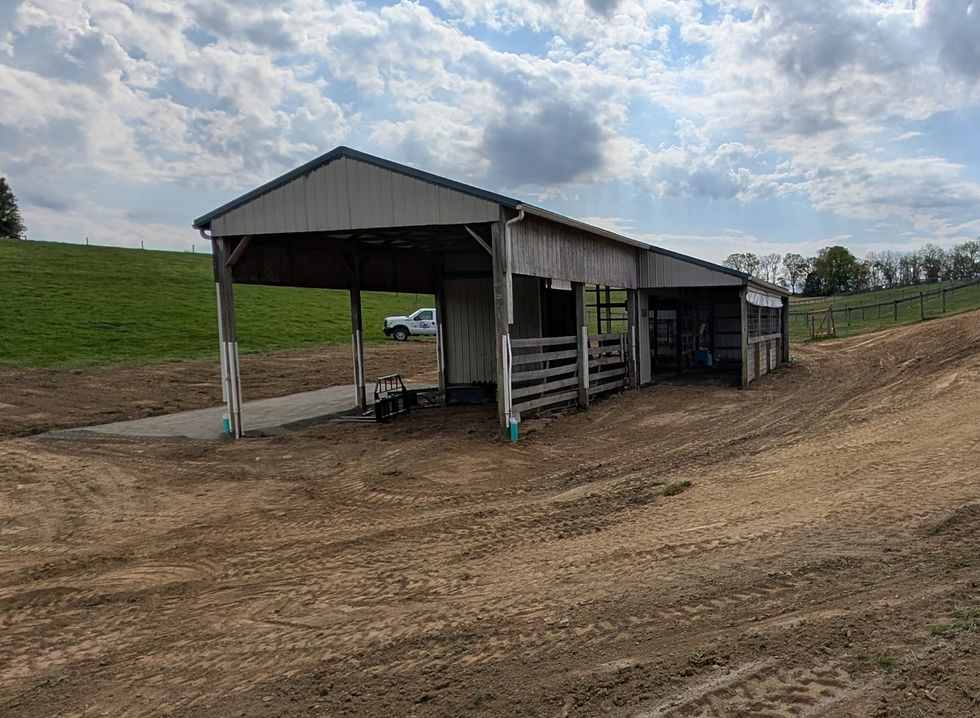
After installation, the property now has a comprehensive drainage system designed to intercept groundwater, capture roof runoff, and move water away from the barn.
The benefits include:
Reduced standing water
Less mud around the barn
Improved usability of the property
Better conditions for horses
Reduced risk of erosion
Long-term protection for the barn and surrounding improvements
Most importantly, the homeowner now has a property that is far better equipped to handle heavy rainfall.
Signs You May Need a French Drain

French drains can be an excellent solution if you notice:
Standing water after rainstorms
Mud that never seems to dry out
Water collecting around barns, garages, or homes
Wet areas at the bottom of hills
Downspouts creating soggy conditions
Erosion around structures
Areas that remain saturated days after rainfall
The sooner drainage issues are addressed, the easier and less expensive they are typically to correct.
Frequently Asked Questions
How long does a properly installed French drain last?
A professionally installed French drain using quality materials such as geotextile fabric, 2B clean stone, and PVC pipe can provide reliable performance for decades when properly designed and maintained.
Can French drains handle heavy rain?
Yes. French drains are specifically designed to collect and redirect large volumes of water. The key is proper sizing, adequate stone volume, correct pipe installation, and proper discharge locations.
Do French drains require maintenance?
French drains are generally low-maintenance, especially when installed with geotextile fabric to prevent soil infiltration. Periodic inspection of discharge points and connected downspouts can help ensure continued performance.
Related Blog Posts
If you're dealing with drainage problems, you may also be interested in:
Areas We Serve

K+L Construction provides French drain installation, grading, drainage solutions, excavation services, septic work, and horse property improvements throughout Berks County and the surrounding areas, including Boyertown, Bally, Fleetwood, Kutztown, Oley, Reading, Bechtelsville, Topton, Pottstown, Quakertown, and neighboring communities throughout Southeastern Pennsylvania.
Need Help Solving Drainage Problems?
If water is collecting around your home, barn, driveway, paddock, or other structures, we can help identify the cause and recommend a solution that works.


Comments